
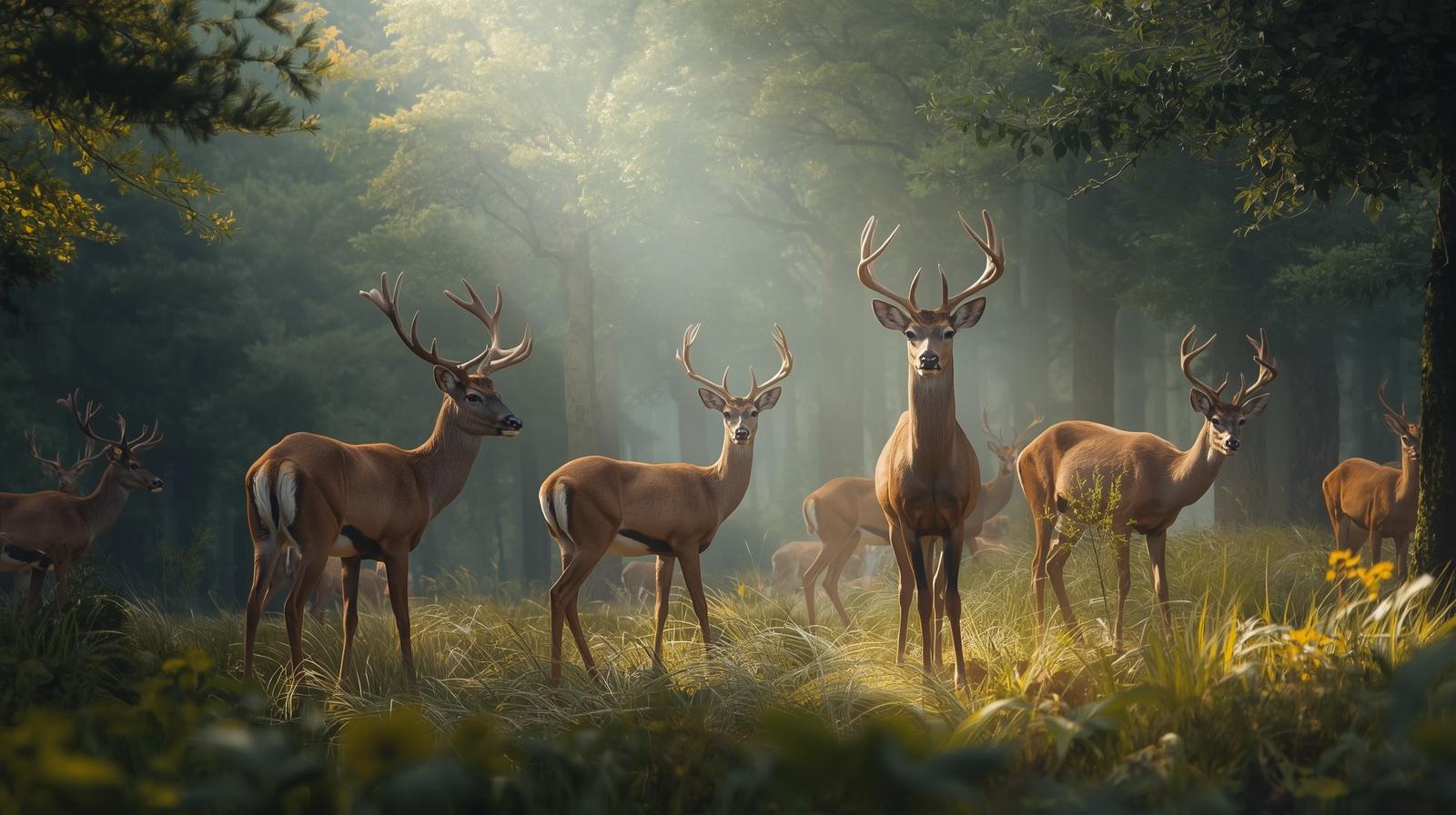
Deer are among the most widely recognized and ecologically significant mammals of the family Cervidae. Found across every continent except Antarctica and Australia, these graceful herbivores display remarkable diversity in size, antler structure, and behavior. From the dense forests of North America to the mountainous regions of Europe and Asia, deer have adapted to a variety of habitats, demonstrating incredible resilience and evolutionary success.
The family Cervidae encompasses multiple subfamilies, including Capreolinae, Cervinae, and the rare Hydropotinae, each with unique adaptations that reflect their environments. While some deer species, such as the moose, command attention with enormous antlers and imposing size, others, like the water deer, remain relatively small yet fascinating for their specialized habitats.
Over millennia, deer have played a crucial role in ecosystems, influencing plant growth, shaping landscapes, and serving as prey for a range of predators. Human interaction has also profoundly impacted deer populations, from hunting and habitat changes to modern conservation efforts that balance population control with ecological preservation.
Understanding deer requires exploring their anatomy, behavior, and ecological relationships, as well as recognizing the diversity within extinct and living species. This guide provides a comprehensive look into the world of deer, from their unique physical features to their global distribution, feeding habits, and the incredible antlers that define much of their identity.
1. Subfamily Capreolinae
- New World Deer Species (Capreolinae)
- The Capreolinae Lineage of Deer
- White-tailed and Relatives: Capreolinae
- Deer of the Western Hemisphere
- Capreolinae: Antlered Forest Runners
- Woodland Deer of the Americas
- Capreolinae: Evolutionary Deer Subfamily
- Long-legged Deer of North and South America
- The Range of Capreolinae Deer
- Deer Adapted to Temperate Climates
- Capreolinae: Deer Specialists of Forests
- Small to Medium Deer of the Americas
- Antlered Deer of Diverse Habitats
- Capreolinae: From Arctic to Tropics
- Deer of the New World Ecosystems
2. Subfamily Cervinae
- Old World Deer Subfamily: Cervinae
- Cervinae: Deer of Europe and Asia
- Red Deer and Relatives: Cervinae
- Forest and Mountain Deer of the Old World
- Cervinae: Majestic Deer Lineage
- Antlered Deer of Europe, Asia, and Beyond
- Cervinae: Adapted to Varied Habitats
- The Temperate Deer of the Old World
- Deer with Strong, Branching Antlers
- Cervinae: Species of Global Significance
- Deer of Forests and Plains: Cervinae
- Cervinae: Ecological Specialists
- Long-standing Deer of Eurasia
- Old World Antlered Deer Diversity
- Cervinae: Iconic Deer of Cultural Heritage
3. Subfamily Hydropotinae
- Water Deer and Small Marsh Dwellers
- Hydropotinae: Unique Small Deer
- Deer Adapted to Wetlands and Rivers
- The Aquatic Deer Subfamily
- Hydropotinae: Rare and Unusual Deer
- Marsh Deer of Asia
- Hydropotinae: Tiny Deer with Big Character
- Deer of Flooded Plains and Riparian Zones
- The Curious Water Deer Lineage
- Hydropotinae: Specialists of Wet Habitats
- Deer with Exceptional Swimming Skills
- Unique Deer of Asian Wetlands
- Hydropotinae: Small but Notable
- Deer Adapted to Water-Rich Ecosystems
- The Distinctive Hydropotinae Group
4. Extinct Deer
- Deer Lost to History
- Extinct Species of the Cervidae Family
- Ancient Deer of Prehistoric Times
- Fossil Records of Extinct Deer
- Ice Age Deer and Their Descendants
- Deer Species That No Longer Roam
- Extinct Deer: Lessons from the Past
- Prehistoric Deer of the Americas and Eurasia
- Ancient Antlered Giants
- Deer Disappeared from Natural Habitats
- The Vanished Lineages of Cervidae
- Extinct Deer of Forest and Steppe
- Lost Deer Species Through Time
- Deer Erased by Climate and Predators
- Fossil Deer: A Window into Evolution
5. Deer
- An Overview of Deer Species
- The World of Antlered Herbivores
- Deer: Forest and Grassland Specialists
- The Cervidae Family Explored
- Deer Across Continents
- From Fawns to Bucks: Deer Life
- Deer: Social and Seasonal Patterns
- The Diversity of Deer Species
- Deer Habits and Habitats
- Understanding the Deer Family
- Antlered Mammals of Global Ecosystems
- Deer Behavior and Ecology
- Iconic Forest Dwellers: Deer
- Deer Across Climates and Terrains
- The Complete Guide to Deer
6. Are Deer Herbivores or Omnivores?
- Deer Diets Explained: Herbivore or Omnivore?
- What Do Deer Eat?
- Understanding Deer Feeding Habits
- Plant Eaters or Opportunistic Feeders?
- The Vegetarian Nature of Deer
- Deer Nutrition and Food Choices
- Herbivorous Deer Across Regions
- Deer Foraging Behavior in the Wild
- Diet Variations Among Deer Species
- What Fuels a Deer’s Life?
- From Leaves to Fruits: Deer Food Sources
- Understanding Herbivory in Deer
- Deer Eating Habits Explained
- How Deer Find and Consume Food
- Natural Diets of the Cervidae Family
7. How Many Types of Deer Are There?
- Global Diversity of Deer Species
- Counting the World’s Deer
- How Many Deer Species Exist?
- Deer Families and Subfamilies Explored
- From Capreolinae to Cervinae: Deer Numbers
- Mapping Deer Species Across Continents
- Species Variety in the Deer Family
- Deer Taxonomy: A Complete Overview
- Exploring Deer Diversity Worldwide
- The Number of Deer in Nature
- Deer Classification and Species Count
- Worldwide Distribution of Deer Types
- Identifying Distinct Deer Species
- Deer Species Across Ecosystems
- How Many Kinds of Deer Exist?
8. How Long Does It Take for a Deer to Grow Antlers?
- The Antler Growth Timeline
- How Deer Develop Their Antlers
- From Bud to Branch: Deer Antler Growth
- Seasonal Antler Development in Deer
- Timeline of Antler Formation
- Growth Cycle of Deer Antlers
- How Fast Do Deer Grow Antlers?
- Deer Antlers: From Young to Mature
- Understanding Antler Regeneration
- Factors Affecting Deer Antler Growth
- Antler Growth Patterns Across Species
- The Science Behind Deer Antlers
- Seasonal Changes in Antler Size
- Development of Male Deer Antlers
- From First Spike to Majestic Rack
9. What Physical Feature Is Considered Characteristic of Deer?
- The Signature Deer Antlers
- Distinctive Deer Tails and Coats
- Features That Define Deer
- Antlers, Hooves, and Other Deer Traits
- Unique Physical Marks of Deer
- Recognizing Deer in the Wild
- The Iconic Deer Silhouette
- Coat Patterns and Antler Shapes
- Characteristic Deer Features Explained
- What Makes a Deer a Deer?
- Identifying Traits of the Cervidae Family
- Distinctive Horns and Fur
- Body Shape and Antlers of Deer
- Signature Features of Male and Female Deer
- Deer Anatomy Highlights
10. Which Deer Has the Largest Antlers?
- Giants of the Antler World
- Deer with Record-Breaking Antlers
- Moose: The Largest-Antlered Deer
- Comparing Antler Sizes Across Deer Species
- Antler Champions in the Deer Family
- The Biggest Bucks of the Wild
- Species Known for Impressive Antlers
- Giant Antlers of Cervidae Explained
- Deer That Grow Extraordinary Antlers
- Ranking Deer by Antler Size
- Deer with Majestic Branching Antlers
- The Largest Antler Bearers
- Antler Size Across Global Deer Species
- From Moose to Elk: Deer Antler Giants
- Deer Records: Antler Growth and Size
Conclusion
Deer remain one of nature’s most versatile and captivating mammals, remarkable for their adaptability, diversity, and ecological significance. From the sprawling forests of North America to the wetlands of Asia, these members of the Cervidae family have evolved unique physical traits, behaviors, and survival strategies that allow them to thrive across vastly different habitats. Their antlers, a defining characteristic of many species, not only serve as tools in reproduction and defense but also symbolize the resilience and beauty of these animals.
While some species face challenges from habitat loss, human activity, and competition with other wildlife, ongoing conservation efforts have helped maintain stable populations and protect vulnerable species. Studying deer provides valuable insights into ecosystem dynamics, species interactions, and evolutionary adaptations, making them a critical subject for both wildlife enthusiasts and scientists alike.
By exploring the variety of deer—from the widespread Capreolinae to the rare Hydropotinae, and even extinct species—we gain a deeper appreciation for the intricate balance of nature and the enduring legacy of these iconic mammals. Deer are more than just forest dwellers; they are a testament to adaptability, survival, and the enduring connection between wildlife and the landscapes they inhabit.

I’m Harper Grace, an SEO and Content Writing Specialist with 3+ years of experience and 60+ satisfied clients worldwide. At EpicNamezCraft.com, I craft unique and trending name ideas that help brands and individuals find names that stand out and connect.