
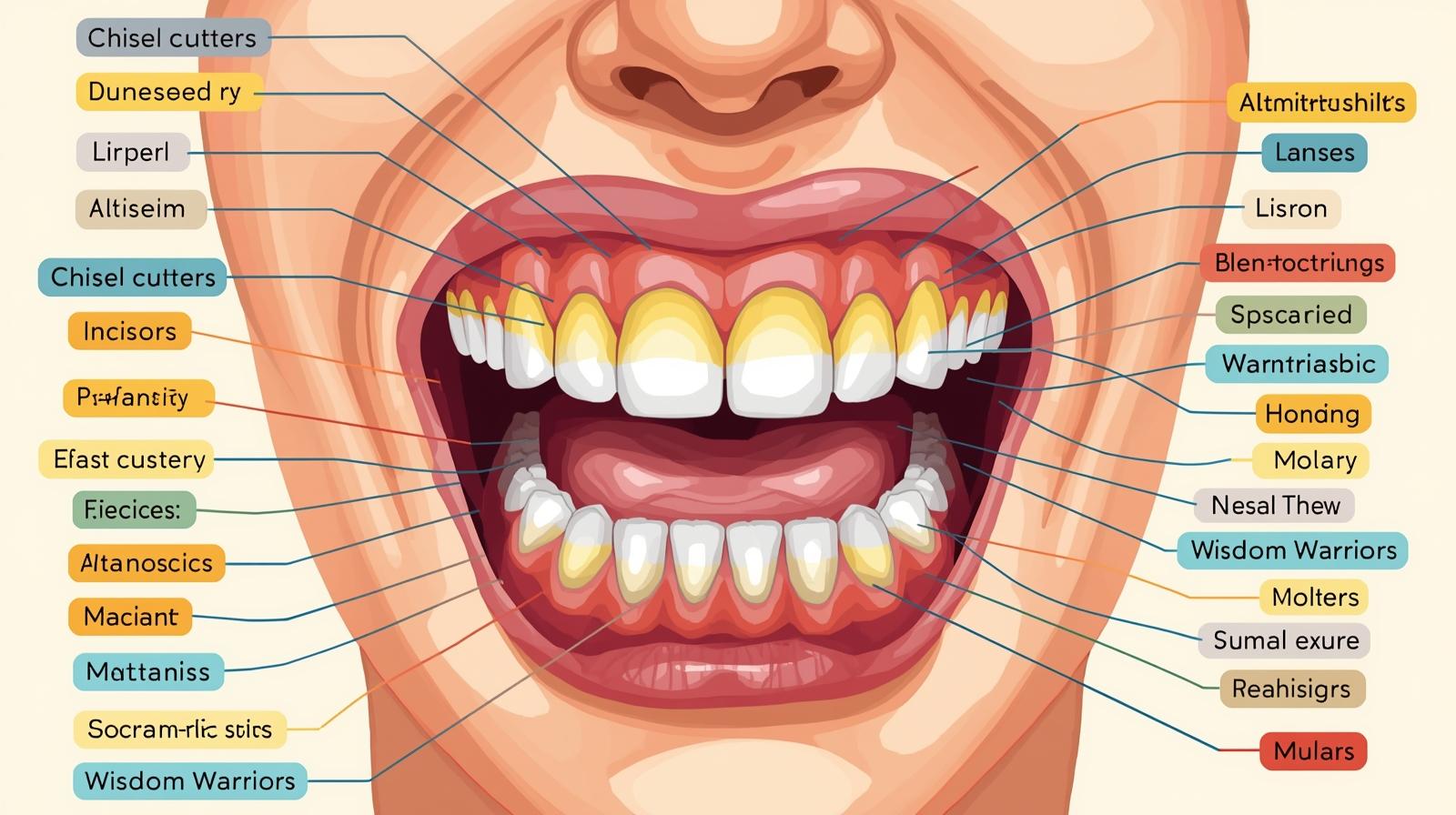
Our teeth are more than just tools for chewing—they play a key role in speaking, smiling, and keeping our mouths healthy. Each type of tooth has a special shape and purpose, from slicing food with front teeth to grinding it with molars. Understanding the names and functions of all 32 permanent teeth, including wisdom teeth, helps you take better care of your oral health. This guide explains each tooth clearly, making it easy to identify and appreciate their unique roles in your mouth.
Teeth and Their Names – 30 Original Options
- Chisel Teeth (Incisors) – The front teeth for cutting and slicing food. Sharp and flat for precision.
- Tearers (Canines) – Pointed teeth next to incisors for gripping and tearing food.
- Double Points (Premolars) – Teeth with two cusps for holding and crushing small bites.
- Grinding Giants (Molars) – Large rear teeth for crushing and grinding food into digestible pieces.
- Wisdom Chompers (Third Molars) – Last teeth to erupt, often removed to prevent crowding.
- Front Slicers (Incisors) – Four teeth at the front, used to bite and hold food.
- Piercing Points (Canines) – Sharp teeth that puncture and tear tougher foods.
- Dual Crushers (Premolars) – Flat teeth with dual points to crush food efficiently.
- Back Breakers (Molars) – Strong rear teeth designed for grinding and breaking down meals.
- Late Bloomers (Wisdom Teeth) – Teeth that appear in late teens, often causing discomfort.
- Edge Cutters (Incisors) – Thin, wide teeth designed for slicing and cutting bites.
- Food Grabbers (Canines) – Teeth used to hold and pull apart food before chewing.
- Bicuspid Chewers (Premolars) – Mid-jaw teeth that hold and crush food in preparation for grinding.
- Meal Crushers (Molars) – Broad teeth at the back for grinding and preparing food for swallowing.
- Hidden Helpers (Wisdom Teeth) – Third molars that can aid chewing if healthy, but often removed.
- Center Slicers (Incisors) – Middle teeth for precise biting and cutting of food.
- Pointed Graspers (Canines) – Conical teeth that assist in tearing and holding food firmly.
- Twin Peaks (Premolars) – Teeth with two peaks or cusps, perfect for crushing food.
- Power Grinders (Molars) – Strong, flat-topped teeth at the back of the mouth for heavy chewing.
- Delayed Entrants (Wisdom Teeth) – Teeth erupting in late teens; sometimes removed to prevent crowding.
- Slice and Dice (Incisors) – Front teeth shaped to cut through food easily.
- Pierce and Tear (Canines) – Teeth specialized for gripping and tearing tougher foods.
- Middle Crushers (Premolars) – Teeth located between canines and molars for holding and crushing food.
- Back Flatteners (Molars) – Broad teeth with multiple cusps designed to grind food into fine particles.
- Late Arrivals (Wisdom Teeth) – Third molars that appear later in life, often impacted.
- Front Chompers (Incisors) – Four front teeth for biting and holding food.
- Sharp Holders (Canines) – Strong, pointed teeth to hold and tear bites efficiently.
- Twin Tooth Crushers (Premolars) – Teeth with dual points for managing food before grinding.
- Ultimate Grinders (Molars) – Teeth with multiple cusps for thoroughly breaking down meals.
- Final Molars (Wisdom Teeth) – Last teeth in each quadrant, sometimes needing removal due to space issues.
Unique Teeth Names with Explanations
- Chisel Cutters – Front teeth designed to slice through food easily.
- Pointed Piercers – Sharp teeth for gripping and tearing tougher bites.
- Twin Crushers – Premolars with two points to hold and crush food.
- Meal Grinders – Molars for breaking down food into fine pieces.
- Late Bloomers – Wisdom teeth that appear in late teens, sometimes removed.
- Slice Masters – Incisors specialized in cutting food precisely.
- Food Grabbers – Canines that hold and pull apart food before chewing.
- Dual Peaks – Premolars with two cusps for crushing food efficiently.
- Power Smashers – Molars built to grind and crush tough meals.
- Hidden Helpers – Third molars that assist chewing but may need removal.
- Center Slicers – Middle front teeth for accurate biting.
- Piercing Points – Canines that tear through meat or fibrous foods.
- Bicuspid Holders – Premolars that grip and crush mid-sized bites.
- Back Breakers – Strong molars at the rear for grinding food.
- Final Chompers – Wisdom teeth appearing last in each quadrant.
- Edge Cutters – Thin front teeth shaped for slicing food.
- Sharp Graspers – Canines that hold and tear bites efficiently.
- Twin Tooth Crushers – Premolars with dual points for tough food.
- Ultimate Grinders – Molars designed for heavy chewing.
- Delayed Entrants – Wisdom teeth appearing later, often impacted.
- Front Slicers – Incisors for cutting and holding food.
- Conical Holders – Pointed canines for gripping bites firmly.
- Middle Crushers – Premolars between canines and molars.
- Back Flatteners – Broad molars with multiple cusps for grinding.
- Late Arrivals – Third molars erupting after teens.
- Front Chompers – Incisors that bite into food first.
- Pierce and Tear – Canines specialized for tough foods.
- Dual Point Crushers – Premolars managing food before grinding.
- Mega Grinders – Molars with strong cusps for heavy chewing.
- Wisdom Warriors – Third molars that appear late and sometimes cause issues.
Conclusion
Understanding the names and roles of each tooth helps you appreciate how your mouth works every day. From front teeth that slice to molars that grind, every tooth has a unique job. Taking care of them with proper hygiene and regular dental checkups ensures they stay healthy and functional for a lifetime. Remember, healthy teeth make eating, speaking, and smiling easier and more enjoyable.

I’m Harper Grace, an SEO and Content Writing Specialist with 3+ years of experience and 60+ satisfied clients worldwide. At EpicNamezCraft.com, I craft unique and trending name ideas that help brands and individuals find names that stand out and connect.