
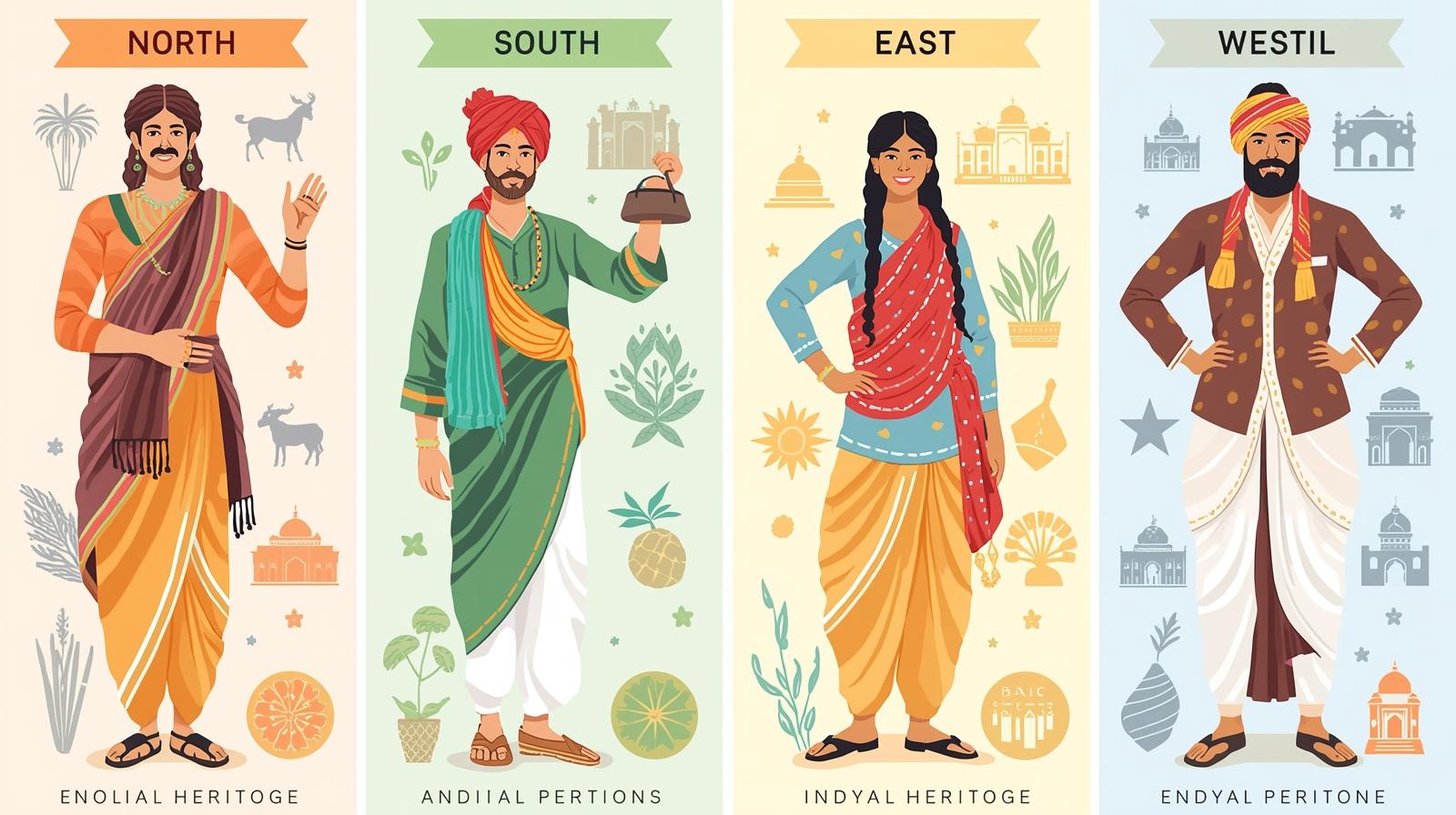
Indian last names are more than just words—they carry history, culture, and identity. From signaling your ancestral profession to showing your community, religion, or region, surnames in India tell stories that span generations. With so many variations across states, languages, and castes, understanding these names helps you connect with your roots, choose meaningful names, or simply appreciate India’s rich cultural tapestry.
In this guide, we explore common surnames, regional patterns, religious influences, diaspora adaptations, and even unique or funny last names, giving you a complete and engaging look at Indian naming traditions.
Most Common Indian Last Names (With Region-Wise Rankings)
Here’s a look at the 31 most popular Indian last names today, along with their meanings, origins, and the regions where they are most common:
| Rank | Last Name | Estimated Bearers | Meaning / Origin | Region |
| 1 | Singh | ~35M | Lion; warrior or protector | Punjab, North India |
| 2 | Devi | ~32M | Goddess; honorific for women | Bihar, West Bengal |
| 3 | Kumar | ~30M | Prince / youth | Pan-India |
| 4 | Das | ~12M | Servant of God | Bengal, Odisha |
| 5 | Kaur | ~10M | Princess / female Sikh title | Punjab |
| 6 | Yadav | ~9M | Pastoral caste, Krishna lineage | UP, Bihar, Haryana |
| 7 | Sharma | ~8M | Priest / scholar | North India |
| 8 | Patel | ~7M | Village headman | Gujarat, Maharashtra |
| 9 | Reddy | ~6M | Landowning community | Andhra Pradesh, Telangana |
| 10 | Verma | ~5M | Shielded / noble | Central / North India |
| 11 | Naidu | ~4.5M | Chief / community leader | Andhra Pradesh |
| 12 | Mehta | ~4M | Accountant / administrator | Gujarat, Rajasthan |
| 13 | Chowdhury | ~3.5M | Landlord title | Bengal, Assam |
| 14 | Jain | ~3M | Non-violent merchant | Gujarat, Rajasthan |
| 15 | Mandal | ~2.8M | Village head / landholder | Bihar, Bengal |
| 16 | Ghosh | ~2.5M | Cowherd / Kayastha | Bengal |
| 17 | Shah | ~2.4M | Merchant / banker | Gujarat, Maharashtra |
| 18 | Bhat | ~2.3M | Scholar / priest | Kashmir, Karnataka |
| 19 | Nair | ~2M | Warrior caste | Kerala |
| 20 | Shetty | ~1.9M | Business caste | Karnataka, Coastal West |
| 21 | Gupta | ~1.8M | Protected / trader | Bihar, UP, Bengal |
| 22 | Tripathi | ~1.7M | Scholar from three Vedas | UP, MP |
| 23 | Agarwal | ~1.6M | Merchant / trading class | North & West India |
| 24 | Pandey | ~1.5M | Brahmin / teacher | UP, Bihar |
| 25 | Joshi | ~1.4M | Astrologer / priest | Maharashtra, Gujarat |
| 26 | Sinha | ~1.3M | Derived from Singh | Bihar, Jharkhand |
| 27 | Iqbal | ~1.2M | Poetic / Muslim name | North India |
| 28 | Syed | ~1.1M | Prophet’s descendant | Muslim regions |
| 29 | Begum | ~1M | Muslim honorific for women | East India, Bangladesh border |
| 30 | Ali | ~0.95M | Noble / Islamic surname | Pan-North India |
| 31 | Chavan | ~0.9M | Maratha warrior | Maharashtra |
Indian Last Names by Caste, Class, and Community
Caste is a major influencer in Indian surnames, reflecting ancestral professions and social hierarchy. Here are 23 notable caste-linked surnames:
| Last Name | Caste / Community | Meaning / Role |
| Sharma | Brahmin | Scholar / priest |
| Pandey | Brahmin (Awadhi/Maithil) | Ritual expert / teacher |
| Bhattacharya | Bengali Brahmin | Head scholar / pundit |
| Tripathi | Brahmin | Scholar from three Vedas |
| Tiwari | Brahmin | Ritual officiator |
| Yadav | OBC (Ahir community) | Cattle-herders, Krishna lineage |
| Kurmi | OBC | Farmers / tillers |
| Reddy | Kamma/Reddiar (OC/OBC) | Landowners / warrior-farmers |
| Naidu | Kapu / Balija (OBC) | Village administrator |
| Gowda | Vokkaliga (OBC/OC) | Farmer community head |
| Verma | SC/OBC/Brahmin | “Armored,” upward mobility name |
| Patel | Patidar (OC) | Village headman / tax collector |
| Mehta | Vaishya / Bania | Accountant / finance |
| Agarwal | Vaishya | Merchant / trading community |
| Jain | Jain religion / Vaishya | Non-violent merchant community |
| Shetty | Bunt / Tuluva | Feudal landlords / businessmen |
| Deshmukh | Maratha (Kshatriya) | Provincial chief |
| Chavan | Maratha | Warrior clan |
| Singh | Rajput / Sikh / Kshatriya | Lion / warrior |
| Thakur | Rajput / Landed caste | Landlord / warrior |
| Mandal | SC/OBC (East India) | Village administrator |
| Das | SC/Brahmin/OBC | “Servant of God” |
| Koli | SC/OBC | Fisherfolk / coastal caste |
Surprising Facts About Indian Last Names and Caste
Indian last names carry hidden stories that most people don’t realize. Beyond identifying a family, many surnames reveal history, social mobility, and cultural quirks. Here are some surprising facts that make Indian naming traditions fascinating:
- Caste isn’t always obvious. Some last names, like Verma or Das, are used by multiple castes across regions.
- Titles became surnames. Names like Patel, Deshmukh, and Shetty started as occupational or leadership titles.
- South Indian names often skip the family surname. Initials or father’s names replace last names entirely in states like Tamil Nadu.
- Sikh surnames erase caste. Singh and Kaur were universalized to promote equality in 1699.
- Women’s names evolve post-marriage. Some keep their father’s surname, some adopt the husband’s, and others combine both.
- Some last names reflect devotion. Names like Subramanian or Lakshminarayanan honor deities rather than family lineage.
- Migration changes surnames. Indian Americans often shorten, hyphenate, or adapt names for easier pronunciation abroad.
- Long surnames can tell stories. Sodabottleopenerwala literally refers to a family trade from generations ago.
- Caste-based surnames show historical mobility. Families sometimes changed last names to climb social ranks or escape stigma.
- Religion influences pronunciation and spelling. Muslim surnames like Farooqi or Ansari carry Arabic roots, while Christian names often reflect Portuguese influence.
- Some surnames reveal multiple identities. Names like Chavan or Reddy connect caste, region, and occupation simultaneously.
Conclusion
Indian last names are more than just identifiers—they are windows into history, culture, and identity. Each surname tells a story of ancestry, profession, religion, region, or social change, reflecting the rich diversity of India. From the warrior lions of Singh to the scholarly Sharmas, and from unique Parsi trades to adapted diaspora forms, every name carries meaning and legacy. Understanding these surnames helps us appreciate India’s traditions, connect with our roots, and celebrate the fascinating tapestry of names that shape who we are today.
I’m Harper Grace, an SEO and Content Writing Specialist with 3+ years of experience and 60+ satisfied clients worldwide. At EpicNamezCraft.com, I craft unique and trending name ideas that help brands and individuals find names that stand out and connect.